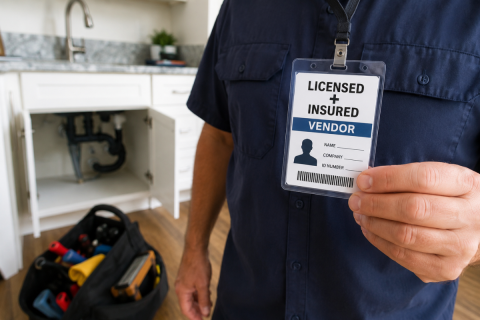
Why Property Owners Should Only Hire Licensed and Insured Vendors for Rental Repairs
When you own a rental property, maintenance is more than a simple checklist item. Every repair decision affects your investment, your tenants, your legal exposure, and your long-term profitability. That is why choosing licensed and insured vendors is one of the most important decisions a landlord or property owner can make.
It can be tempting to hire the cheapest person available, especially when a tenant needs something fixed quickly. Maybe a homeowner recommends “a guy they know.” Maybe an unlicensed contractor offers a quote far below a professional vendor. At first, that lower price may seem like smart savings.
But in rental property management, the lowest quote can sometimes become the most expensive mistake.
From plumbing leaks and electrical issues to HVAC repairs and structural work, rental repairs should be handled by qualified professionals who are properly licensed, insured, and vetted. This protects the property owner, the tenant, and the property management company responsible for coordinating the work.
Below, we’ll explain why licensed and insured vendors matter, what risks come with unlicensed repair work, and how professional vendor vetting supports safer, more reliable rental property maintenance.
Why Licensed and Insured Vendors Matter for Rental Property Owners
A licensed vendor has met state or local requirements to perform specific types of work. This may include training, testing, registration, code knowledge, and ongoing compliance. An insured vendor carries coverage that can help protect against accidents, injuries, property damage, or other job-related issues.
For rental property owners, this matters because repair work is not happening in a private vacuum. It is happening inside an occupied or income-producing property. If something goes wrong, the consequences can involve tenants, neighbors, insurance companies, local inspectors, and even attorneys.
Hiring licensed and insured professionals helps reduce those risks. It also gives owners more confidence that repairs are completed according to proper standards, especially for higher-risk trades like plumbing, electrical, roofing, HVAC, and structural work.
The Hidden Risks of Hiring Unlicensed or Uninsured Vendors
Unlicensed vendors may offer lower prices because they do not carry the same costs as legitimate professionals. They may not pay for licensing, liability insurance, workers’ compensation coverage, proper tools, ongoing training, or compliance requirements.
That can make their quote look attractive, but it also shifts more risk onto the property owner.
If an uninsured worker gets injured on the property, the owner could potentially face liability. If faulty electrical work causes a fire, an insurance claim may become more complicated. If improper plumbing causes water damage, mold, or tenant displacement, the initial “savings” can quickly disappear.
There is also a trust factor. Without proper vetting, owners may not know who is entering the property, whether they are qualified, or whether they have a questionable history. For rental properties, where tenant safety and access must be handled carefully, this is a serious concern.
Professional property management companies help reduce this exposure by working with vendors who have been reviewed, documented, and verified before being sent to a property.
How Poor Vendor Choices Can Cost More Over Time
Cheap repairs often become expensive repairs when the work is done incorrectly. A temporary patch may fail. A code issue may be missed. A small leak may become a major water damage claim. A wiring shortcut may create a safety hazard.
In rental property maintenance, delays and repeat repairs also affect tenant satisfaction. Tenants expect repairs to be handled promptly and professionally. If the same issue keeps coming back because the first vendor did not fix it properly, tenants may become frustrated, leave negative reviews, or choose not to renew their lease.
Poor maintenance decisions can also reduce property value. Repeated low-quality repairs can create long-term damage, especially in major systems like plumbing, electrical, HVAC, roofing, and drainage.
Hiring licensed and insured vendors is not just about avoiding liability. It is about protecting the asset.
Licensed Vendors Help Ensure Code Compliance
Many rental repairs must comply with local building codes, safety standards, and permitting rules. This is especially true for electrical panels, major plumbing work, water heaters, HVAC systems, roofing, and structural repairs.
Licensed vendors are more likely to understand the requirements for their trade and know when permits or inspections may be needed. This helps property owners avoid problems during inspections, insurance claims, tenant complaints, or future sales.
Unpermitted or improperly completed work can create major headaches later. A property owner may be forced to redo the work, pay fines, correct code violations, or explain unsafe conditions to an inspector or insurance carrier.
For landlords, compliance is not optional. It is part of operating a safe and responsible rental property.
Insurance Protects Owners, Tenants, and the Property
Vendor insurance is a major layer of protection. General liability insurance may help cover property damage or injury caused by the vendor’s work. Workers’ compensation coverage may apply if the vendor’s employee is injured while working.
Without insurance, the situation can become much more complicated. A property owner may be pulled into disputes or claims that should have been covered by the vendor’s policy.
Before hiring a vendor, property owners should confirm that insurance is active and appropriate for the work being performed. A professional property management company can help with this by maintaining vendor records, requesting certificates of insurance, and reviewing documentation before work begins.
Pros and Cons of Hiring Licensed and Insured Vendors
Like any business decision, hiring licensed and insured vendors comes with considerations. However, for rental property owners, the benefits usually far outweigh the drawbacks.
Pros
1. Better protection from liability
Licensed and insured vendors reduce the risk of owners being exposed to claims related to injury, damage, or poor workmanship.
2. Higher-quality work
Professional vendors are more likely to have the training, tools, and experience needed to complete repairs correctly.
3. Code-compliant repairs
Licensed contractors understand local regulations, safety requirements, and permitting rules.
4. Fewer repeat maintenance issues
Quality repairs help prevent the same problem from returning again and again.
5. Greater tenant confidence
Tenants feel safer and more respected when qualified professionals are sent to handle repairs.
6. Better documentation
Professional vendors typically provide invoices, warranties, proof of work, and records that are useful for owners and property managers.
Cons
1. Higher upfront cost
Licensed and insured vendors may charge more than unlicensed handymen or informal repair workers.
2. Scheduling may require coordination
Reputable vendors can be busy, especially during peak seasons or emergencies.
3. Not every job requires a specialist
Some minor repairs may not require a licensed trade professional, though vendors should still be insured and trustworthy.
Even with these considerations, the long-term value of using qualified vendors is clear. A slightly higher repair cost today can prevent major expenses, legal issues, tenant complaints, and property damage tomorrow.
How Property Managers Vet Vendors
A good property management company does not simply choose the cheapest vendor. Instead, it builds a network of reliable professionals who are screened for quality, pricing, responsiveness, and professionalism.
Vendor vetting may include checking:
Business licensing
Insurance coverage
Trade qualifications
Work history and reputation
Pricing consistency
Communication and response time
Tenant interaction standards
Past performance on similar properties
This process helps owners get competitive pricing without sacrificing safety or quality. The goal is not to overpay for repairs. The goal is to hire the right person for the job at a fair price while avoiding unnecessary risk.
For example, a vendor may offer a very low quote, but if they are unlicensed, uninsured, or have a questionable background, that quote is not truly a bargain. A responsible property manager looks beyond price and considers the full risk to the owner and property.
Why This Matters Even More for Plumbing and Electrical Work
Plumbing and electrical repairs are two of the most important areas where owners should avoid shortcuts.
Improper plumbing work can lead to leaks, mold, water damage, sewer issues, and tenant displacement. Improper electrical work can lead to shocks, outages, fire hazards, code violations, and insurance problems.
These are not areas where owners should gamble on an unverified contractor. Licensed plumbers and electricians have specialized knowledge that protects the property and the people living in it.
When property managers coordinate these repairs, they should prioritize vendors with the right credentials, active insurance, and a proven track record.
Smart Rental Property Maintenance Starts With the Right Vendors
Successful rental property ownership requires more than collecting rent. It requires maintaining the home in a way that protects value, supports tenant retention, and reduces risk.
Using licensed and insured vendors is a key part of that strategy.
The right vendor may not always be the cheapest option on paper, but they are often the most cost-effective choice over time. They help prevent repeat repairs, safety issues, liability problems, and damage that can hurt your bottom line.
For landlords who want peace of mind, professional vendor management is one of the biggest advantages of working with an experienced property management company.
FAQ: Licensed and Insured Vendors for Rental Repairs
Why should rental property owners hire licensed and insured vendors?
Rental property owners should hire licensed and insured vendors because they help protect the property, tenants, and owner from unsafe work, liability claims, code violations, and costly repair mistakes. Licensed vendors are qualified to perform specific work, while insurance provides protection if damage or injury occurs.
Are unlicensed vendors always a bad choice for rental property maintenance?
Unlicensed vendors may be acceptable for very minor tasks that do not require a trade license, but they should still be insured, reliable, and properly vetted. For plumbing, electrical, HVAC, roofing, structural work, or anything involving tenant safety, property owners should use licensed and insured professionals.
How does a property management company choose vendors?
A property management company chooses vendors by reviewing licensing, insurance, work quality, pricing, responsiveness, reputation, and professionalism. This helps landlords get fair pricing while reducing the risks associated with unqualified or uninsured repair workers.
Protect Your Rental Property With Smarter Vendor Management
Your rental property is an investment, and every repair decision matters. Hiring the wrong vendor can expose you to safety concerns, legal risk, poor workmanship, tenant complaints, and expensive follow-up repairs.
Working with a professional property management company gives you access to a vetted network of licensed and insured vendors who can handle repairs properly and responsibly.
If you are a landlord who wants safer, more reliable rental property maintenance, request a free consultation today. Let our team help you protect your property, reduce repair headaches, and make smarter maintenance decisions from the start.